
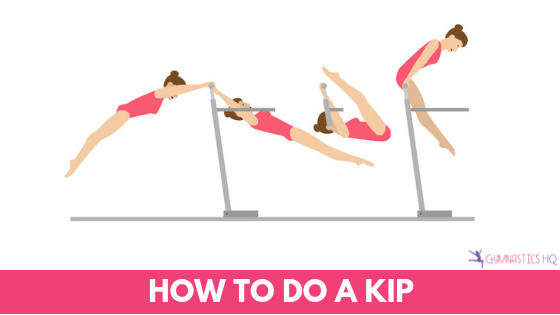

The gymnastics kip is one of the most important bar skills a gymnast will learn. It’s a milestone skill required in the Level 4 bar routine and used by gymnasts at every level after that, including as a mount in optional routines. The kip allows gymnasts to smoothly transition from a hanging position to a support position on top of the bar.
While it may look effortless, the kip requires strength, timing, and proper technique. In this guide, we’ll break down how to do a kip step-by-step, the muscles you need, and the best kip drills and exercises you can practice both at home and in the gym. Whether you’re just starting out or struggling to make your kip consistent, these tips will help you build the foundation to master it with confidence.

What Is a Kip in Gymnastics?
A kip is a foundational bar skill where a gymnast swings forward in a glide, lifts their toes to the bar, and then uses a powerful hip drive and arm pull to finish on top of the bar in a front support position. It combines the power of a glide swing with the strength of a pull-up and the timing of a hip pop.
Simply put: no kip, no higher-level bar routines. Mastering the kip opens the door to giants, cast handstands, and other advanced bar skills.
But first, here are the steps of a kip.
How to do a Kip Step by Step
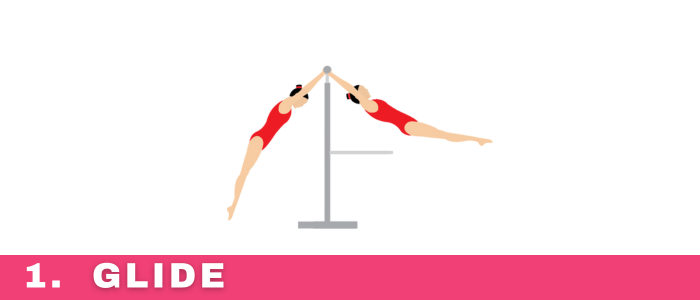
1. Glide
The glide is the first part of the kip when you grab the bar, and extend your legs in a pike or straddle position. During the glide you want your hips to completely open.
2. Pike-Up
The pike-up is when you lift your toes to the bar after you have fully extended your legs and hips in the glide. This part of the kip requires strong core muscles.

3. Pull-Up Your Pants
The “pull-up your pants” part of the kip is similar in motion to pulling up your pants when you get dressed. You are pulling the bar up your body, as you are swinging backward, in order to finish on top of the bar in a front support.


Muscles You Need for a Kip
Strength is just as important as timing when it comes to learning a kip. These are the key muscles that make the skill possible:
- Arms & Shoulders: Support your body weight during the glide and power the pull at the end of the skill.
- Core: Brings your legs to the bar during the pike-up and stabilizes your hollow body position throughout the skill.
- Hips: Provide the explosive pop needed to finish on top of the bar.
Kip Strengthening Exercises You can do at home:
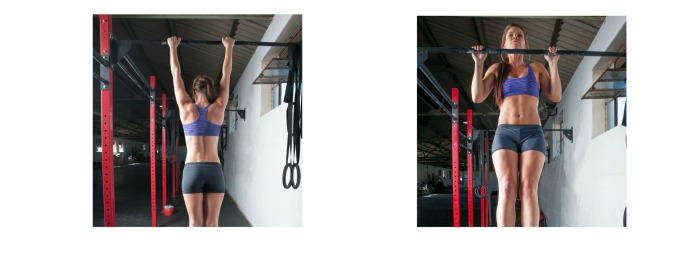
- Pull-Ups- Pull-ups are a great exercise for increasing your arm strength, which you need for a kip. In order to do a pull-up, start by facing your pull-up bar and grab the bar with your palms touching the bar and your fingers pointing away from you. Your hands should be a little farther than shoulder-width apart. Start in a complete dead hang, then squeeze your shoulder muscles and pull-up until your chin is above the bar. That is one repetition. Lower slowly and repeat. A kip also requires a similar motion as a pull-up in the second half of the skill.
- Chin-Ups- A chin-up is similar to a pull-up, but it works different muscles. You can do it the same way as a pull-up, however grab the bar with your fingers pointing towards you.
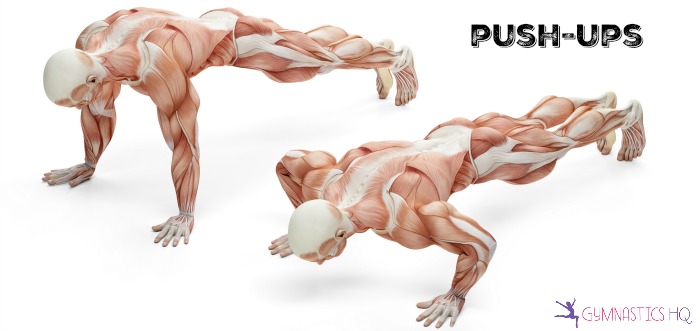
- Push-Ups- Push-ups are also great for increasing your arm strength. Get into a straight-body plank position with your shoulders over your wrists. While squeezing your core and butt, bend your arms. You want to focus on your body position and only go as far down as you can while still maintaining control of your movement. Raise your body again by straightening your arms to complete the repetition.
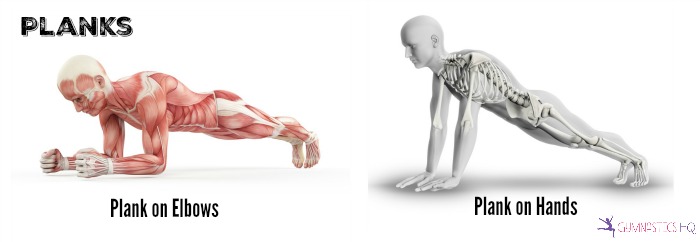
- Planks- Plank exercises work both your arms and core muscles. You can do a plank exercise from either your wrists or your elbows. When you are in the plank position you want to be squeezing your legs, butt and core. Your shoulders should be over your elbows, and your body should be in a straight line from your head to your feet. As you are squeezing all your muscles and maintaining a straight-body position, make sure to breathe!
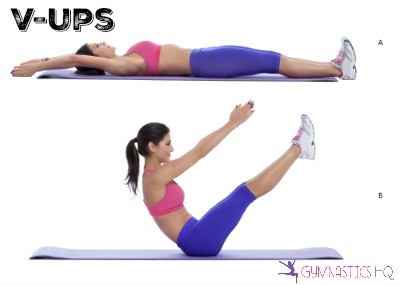
- V-Ups- V-ups are a great exercise to improve your core strength, and they also mimic the motion in the pike-up part of the kip when your legs come to the bar. Start lying flat on the floor with your arms over your head and your legs straight and squeezed together. Using your core, pull your legs up at the same time as you pull your upper-body off the floor, making sure to not arch your back. You want your hands to touch your feet. Lower both your upper-body and your legs back to the floor to complete the repetition.
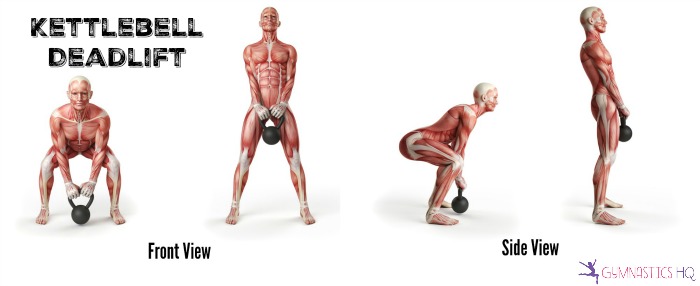
- Kettlebell Deadlift– A kettlebell deadlift is a hip pulling exercise. In order to do a kip, a gymnast needs strong hip muscles. Stand with your feet about shoulder-width apart. Place a kettlebell between your legs, in line with your ankles. With a straight back, looking in front of you, bend from the hips, and reach down to pick up the kettlebell in between your legs. Your shins should be vertical and your lower back should be flat. Then pushing through your legs, return to a standing position.
Kip Drills You Can Do at Home:
- Hollow Holds on the Floor: A hollow hold on the floor is a great exercise to practice the squeezing of the core you need for the glide part of the kip. Start by lying flat on your back with your arms straight over your head. Lift both your arms and your feet off the floor at the same time to form a hollow position. Your back should be pressing into the ground. Hold for a couple seconds and return to lying flat on the floor.
- Tuck Hold on Pull-Up Bar: In order to do a kip you need to have very strong core muscles. A tuck hold is a beginner exercise to help strengthen your core muscles, using a similar motion to what you will be doing in a kip. Hang on your pull-up bar, and pull your knees up in a tuck position while squeezing your core. Hold as long as you can, and then return to a hanging position.
- “L” Hold on Pull-Up Bar: The “L” hold on a pull-up bar is similar to a tuck hold, but more advanced. This time lift your legs straight out in front of you to form an “L” with your body. Concentrate on squeezing your legs together and keeping them straight. Hold it as long as you can and then return to a hanging position.
- Leg Lifts on Pull-Up Bar: Doing leg lifts is the same motion you will be doing in the pike-up portion of the kip. Start in a hang from the pull-up bar and then lift your legs up to touch your toes on the bar, or get them close. Lower your legs and return to a hanging position to complete the repetition.
⭐ Our Top Bar Pick for Practicing Kips
If you’re looking for a sturdy home gymnastics bar that’s strong enough to safely practice a kip, this is our #1 recommendation:

*This bar is durable, stable, and designed for real kip practice — making it a smart choice for gymnasts training at home.
Kip Drills you should be able to do at the gym:
- Glide– You should be able to do a glide focusing on your body position and extending your toes at the end of the glide.
- Glide with Sliders- Another great drill to do to learn a kip is a glide with sliders.
- Rope Kips– A rope kip is a drill that some gyms practice where a bungee-cord-type rope is put on the bars and the gymnast can perform the kip with the assistance of the rope. This is helpful for learning the motion of a kip.
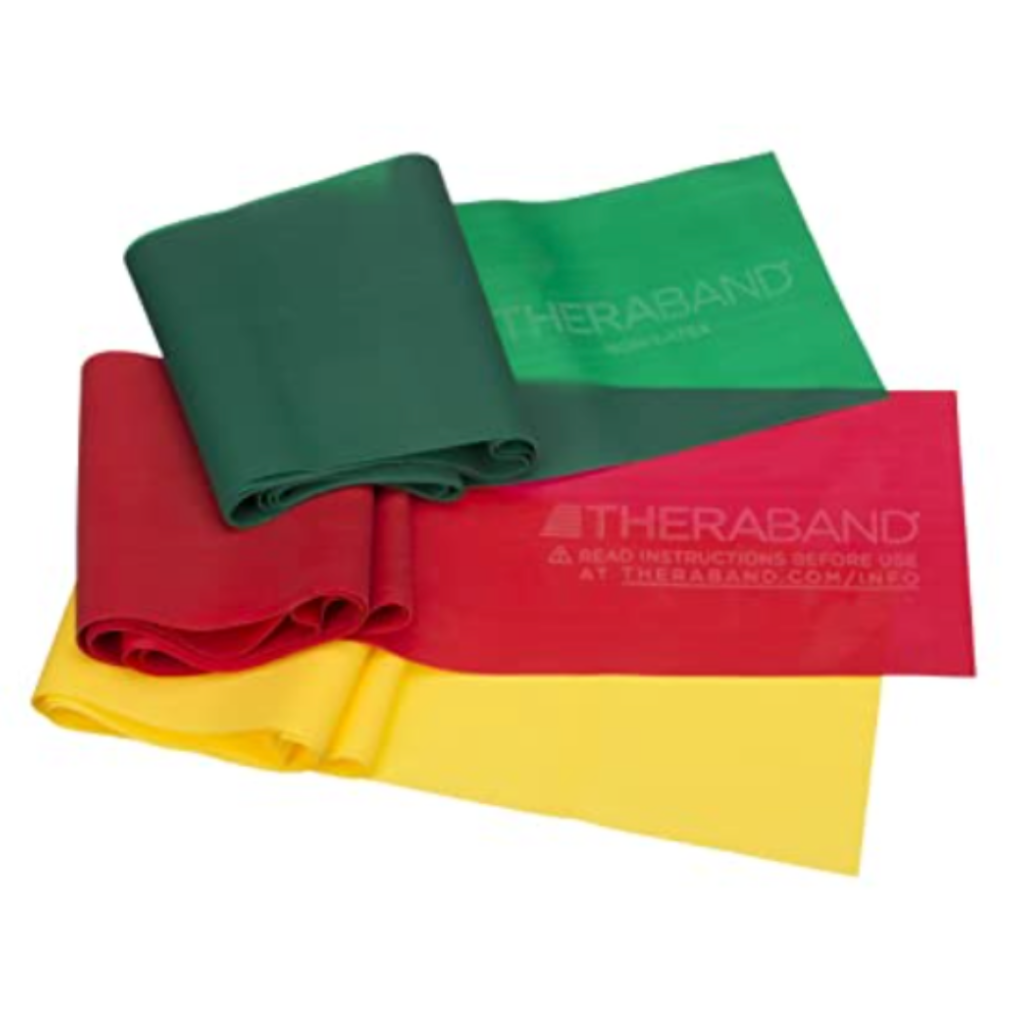
- Band Pulls– In order to practice the arm strength and movement you need for a kip, you can do band pulls with a Theraband. Tie the middle of the resistance band onto something that won’t move, like a bar or stall bars. Sit with your back to where you have tied the band. Hold onto each end of the band with one of your hands. Then keeping your core squeezed, pull the band ends out in front of you.
Check out the home gymnastics equipment we recommend for practicing gymnastics at home. We have linked what we recommend for learning a kip below.
Tools for Learning a Kip |
Description |
Price |
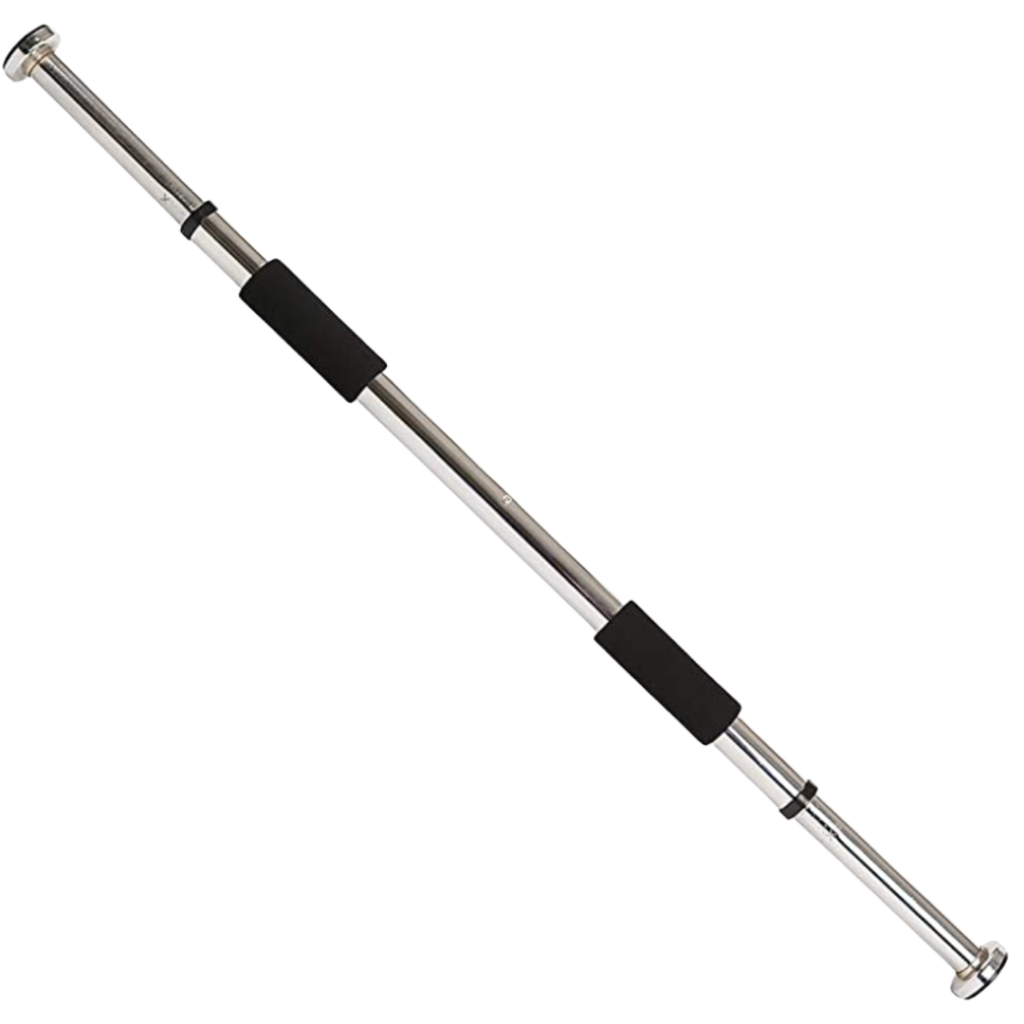
| Pull-Up Bar
|
A pull-up bar is great for doing strength and conditioning exercises at home. | Check Current Price Here |
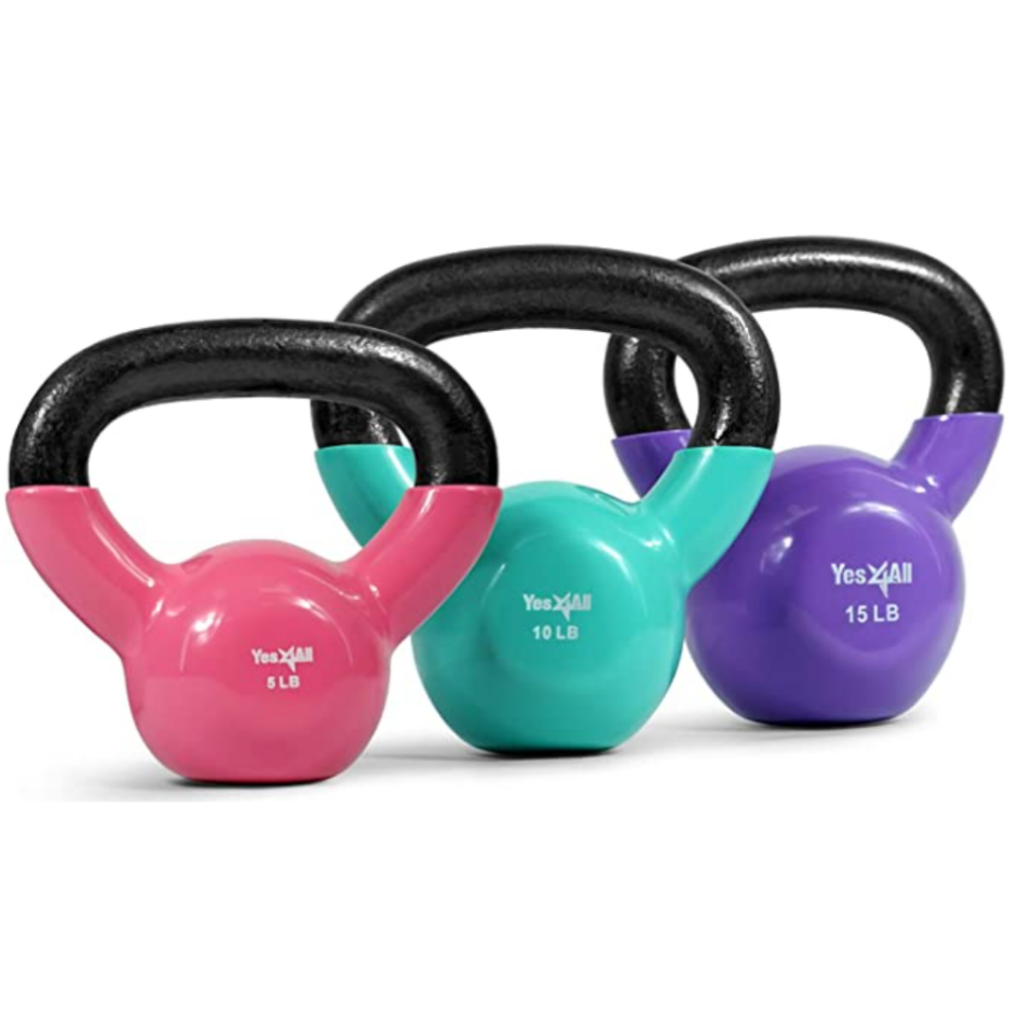
| Kettle bells
|
Kettle bells can be used as resistance when doing strength and conditioning exercises. | Check Current Price Here |
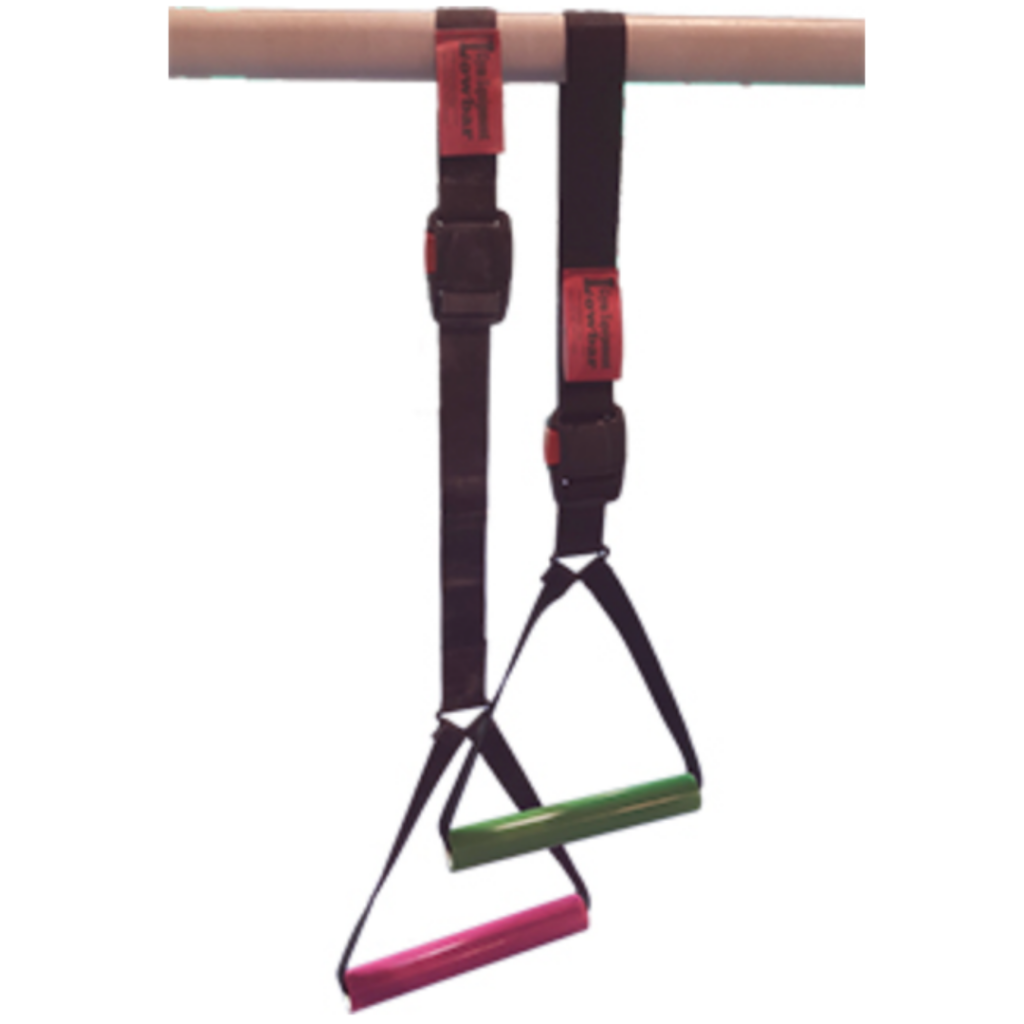
| Kip Trainer
|
The kip trainer helps gymnasts learn the “pull-up your pants” step in a kip. | Check Current Price Here |
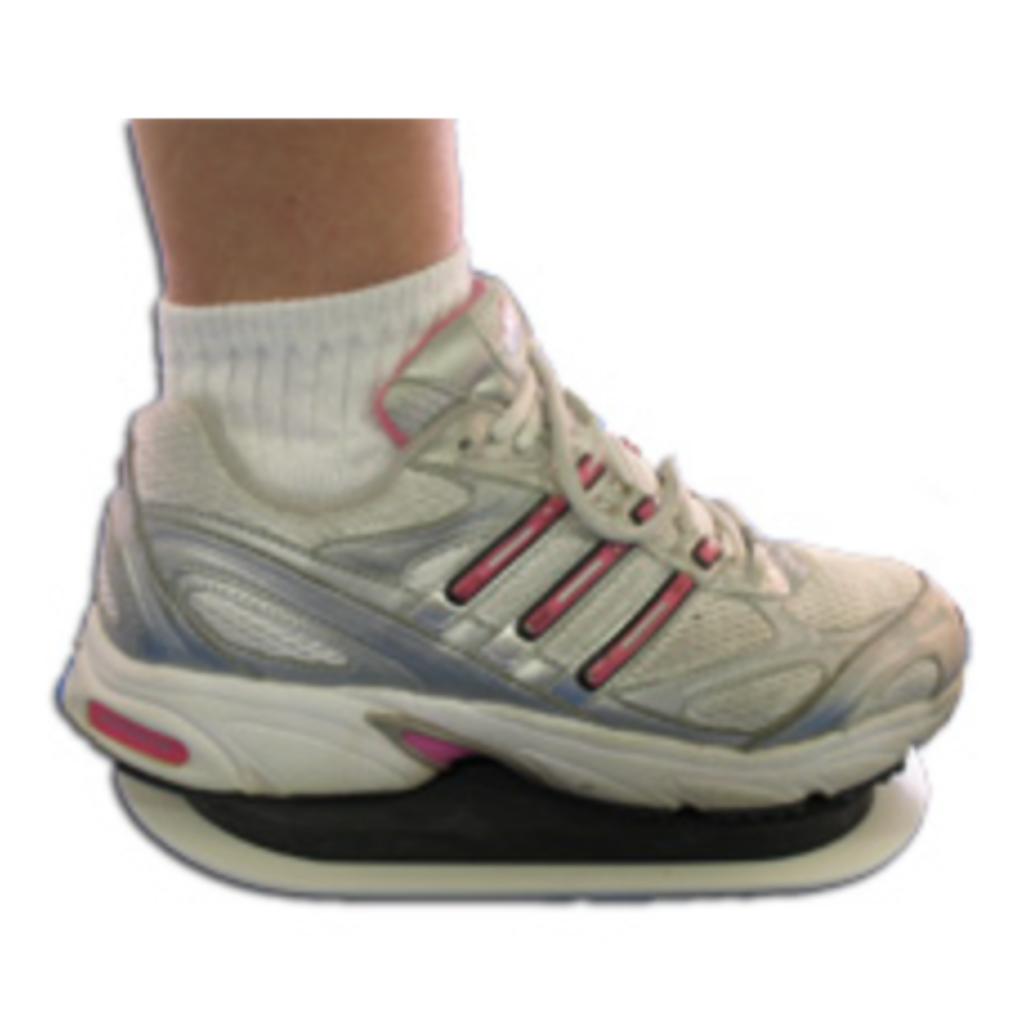
| Sliders
|
Sliders can be used to do the glides with sliders kip drill. | Check Current Price Here |
| Therabands
|
Therabands are useful for providing resistance, and can be used to do band pulls which mimic the kip pulling motion. | Check Current Price Here |
Kip Progressions
Every gymnast works through kip progressions before achieving the full skill. Here’s the typical order:
- Pullover: Teaches upper body strength and the feel of getting on top of the bar. It’s likely the first real bar skill you learn as a gymnast!
- Glide Swing: Establishes proper body position and momentum for the kip.
- Kip: Combining glide, pike-up, pull, and hip pop into the complete skill.
Tips for Learning a Kip
- Use Grips: Most gymnasts use gymnastics grips when they are learning a kip. See our guide to the best gymnastics grips.
- Strengthen Your Core and Upper Body: Focus on exercises like hollow holds, leg raises, and sit-ups to build a strong core. A powerful core helps with the kip’s necessary body control and stability. Incorporate pull-ups, chin-ups, and shoulder exercises to enhance the strength of your shoulders and arms, which are crucial for pulling yourself up during the kip.
- Master the Hollow Body Position: Practice the hollow body position on the floor or on a mat. This position involves lying on your back, lifting your shoulders and legs off the ground while keeping your lower back pressed into the floor.
- Perfect the Kip Timing: Work on the timing of the kip by focusing on the “pull” and “kick” actions. The kip involves a swing forward, followed by a powerful pull and a quick kick to get your hips above the bar. Practice drills like using a spotter or performing kips on a low bar to develop the timing and rhythm needed for the full movement.
- Focus on the Hip Pop: Work on the explosive hip drive needed to get your hips above the bar. This involves snapping your hips quickly and efficiently to help lift your body. Use drills like kip-ups from a tuck position or on a low bar to practice the hip pop and get accustomed to the movement.
Common Mistakes When Learning a Kip
- Incorrect Timing: Ensure you’re pulling and kicking at the right moment in your swing.
- Weak Core Engagement: Maintain a strong hollow body position throughout the kip.
- Ineffective Hip Drive: Generate enough power with your hip kick to get your hips above the bar.
- Poor Grip Technique: Use a firm but relaxed grip on the bar for better control.
Frequently Asked Questions About the Kip
Q: What is a gymnastics kip?
A: A kip is a bar skill where a gymnast swings from a glide, lifts toes to the bar, and uses a pull + hip pop to arrive in front support.
Q: How can I improve my kip?
A: Strengthen your arms, shoulders, and core, practice timing drills, and focus on the hollow body position.
Q: Can anyone learn a kip?
A: Yes! With consistent practice and proper progressions, most gymnasts achieve a kip between Level 3–5.
Q: What are common kip mistakes?
A: Mistimed pull, weak hip drive, not holding hollow, and incorrect hand placement.
Q: How long does it take to get a kip?
A: Every gymnast is different. With regular conditioning and focused drills, many learn it within a few months to a year.
Strengthening the muscles you need for a kip is the most important part of learning how to do a kip. So start doing your home exercises to get stronger. Then, progress by learning and practicing the kip drills you can do at home, along with the drills you should master at the gym. Eventually, with enough practice and strength you will get your kip and can move on to another gymnastics skill!


36 Comments
PLEASE make more f these, maybe for switch leaps, long hang kips, baby giants, tumbling, etc.! They are so helpful!
so glad they are helpful! I will add those skills to the list I have 🙂
Please make more these help me so much
We’re glad they help! 🙂
Could you do one on how to do a clear hip?
Thanks for the suggestion! We’re working on making more and we’ll add clear hip to our list.
Are there drill to help you keep your arms straight
Hi,
I just got my kip the other day, I really need to get a cast out of it how do I do that?
ik im pretty late and you might have it by now but if not, try to keep your legs in front of the bar instead of having them behind you. your body should be poked when you are on top of the bar (cause your legs are in front of you) if your legs are in the back, you will have no power to cast. hope this helps!
Hi,
I just got my kip the other day and I really need to get a big cast out of it. Any tips?
Are there any drills to get a big cast out of a kip?
Sorry these came up 3 times.
Just one thing you mist a step it actually goes glide toes CANDLE pull.
But over all it is really good you explained everything brilliantly.
Thank you for these great tips. I will be sure and do them and see if it helps my kip on bars. Thank you so very much!!! also, do you have any tips for the transition to bar to bar? any tips will be so helpful, thanks so much!!!
Hi! Thanks so much for these tips! I’m really close to my kip and i get to the position in step number 2 during the pike up. I get half way up and then I fall. I’m having trouble getting on top of the bar and getting my hips close enough to get up. Are there any tips on how to get my hips to the bar?
i have the same problem as gymnast116753. please help!
I need help I want to be able to do a kip but I do not have any upper body strength and I do 15 push ups, 10 squats, and I do weight lighting drills (with 10 pounds). Is there any type of drill that will help me to get my kip?
I almost have my kip. I get up to the bar, but for whatever reason, I can’t stay on the bar. Does anyone know why that is?
Yes I got my kip a year ago but I used to have the same problem, try shifting quicker because you probably aren’t shifting enough or fast enough. Hope that helps good luck!
Do you have any tips on how to keep your legs straight?
Can you guys make a tutorial on back hip circle, level 2 dismount, and back tuck
Love the video!! Thanks for sharing!!
Cool breakdown of the kip progression and drills, especially the focus on hollow body and timing on the bar. Many athletes struggling with strength foundations often look into supplemental training programs like https://beachbody.pissedconsumer.com/review.html for community feedback before committing. Consistent conditioning and technique work tend to make the biggest difference when linking swings into the kip.