
Want faster progress between practices? These 10 safe, no-equipment drills build the essentials—handstands, leaps, turns, strength, and flexibility—right at home. Use the 15-minute plan and printable tracker to stay consistent and see week-to-week gains.
Download the Free 1-Page Tracker (PDF)
Jump to:
Handstands ·
Sprints ·
Splits ·
Pull-Ups ·
Scales ·
Jumps ·
Leaps ·
Turns ·
Conditioning ·
Routine
1) Spider-Man Handstand (Against a Wall)
Why it helps: The handstand shape shows up everywhere—floor, beam, bars, cartwheels, round-offs, handsprings.
How: Back to a wall. Hands shoulder-width, fingers spread. Walk feet up and hands in until stomach touches wall, ribs in, neutral head (eyes at hands), tight glutes, pointed toes. Hold.
Common mistakes: Arched back/rib pop, looking between feet, hands too wide, soft legs.
Level up: Beginner 3×15–20s · Intermediate 3×25–35s + slow toe taps · Advanced 3×30–40s + brief freestand exits.
Coach tip: “Push the floor away” (elevate shoulders) and “zipper the ribs.”
More help: Spider-Man tutorial · 4 Tips to Hold Your Handstand Longer · 5 Handstand Drills for Beginners

2) Sprints
Why it helps: Faster, more powerful vaults start with a crisp, accelerating run.
How: 4–6 short sprints (10–25m) with full walk-back recovery. Stay tall, quick turnover, eyes forward.
Common mistakes: Long, reaching strides; slumped posture; minimal recovery.
Level up: Time 3 best sprints and try to beat your average next week.
3) Splits (Right, Left, Middle)
Why it helps: Better splits = higher, cleaner leaps and fewer deductions.
How: Warm hips first (leg swings/lunges). Slide into right/left splits with square hips, front knee to ceiling, back knee to floor. 2×20–30s/side; middle split 20–30s (toes up).
Common mistakes: Twisted hips, bouncing, breath-holding.
Level up: Elevate front foot (book) · 10 controlled split kicks/side · Long-term goal: flat 180° with square hips.
Coach tip: Exhale into the stretch—quality beats depth.
More help: How to Improve Your Splits · 5 Flexibility Exercises
4) Pull-Ups (or Doorframe Hangs)
Why it helps: Essential bar strength and grip endurance.
How: Install a doorway bar. Do 3–5 sets of controlled reps or 15–30s hang holds. No kipping.
Common mistakes: Shrugging (no lat engagement), swinging, half range.
Level up: Add negatives (slow lower), then top holds. No bar? Do inverted rows under a sturdy table.
5) Scales (Front & Back)
Why it helps: Balance + active flexibility + core control for beam and floor.
How: Stand tall on one leg. Front scale: lift straight leg forward; Back scale: lift straight leg back. Hips square; chest lifted.
Common mistakes: Bent supporting knee, tilted hips, dropped chest.
Level up: 2×30s/leg holds; add eyes-closed balance, then slow arm changes.
More help: 3 Types of Scales

6) Jumps
Why it helps: Builds stiffness, posture, and air awareness for beam/floor.
How: Practice straight jumps first: tight body, arms up, land softly in control. Then tuck, straddle, pike, split, half/full turns.
Common mistakes: Loose core, swinging arms, noisy landings.
Level up: 3×6 quality reps per jump; film to check posture and toe point.

7) Leaps
Why it helps: Leaps are required on beam and floor; clean shapes reduce deductions.
How: From a lunge, swing through to a split leap. Emphasize square hips, straight knees, pointed toes, even split.
Common mistakes: Bent front knee, uneven split, dropped chest.
Level up: 3×4 quality leaps; add run-up once shapes are clean; chase consistent height.
More help: Split Leap Guide · 5 Drills for Split Leaps · At-Home Split Leap Workout

8) Turns
Why it helps: Turns are required elements; control = fewer wobbles.
How: On carpet or socks on a hard floor, rise tall, passé, arms fixed. Spot a point. Practice quarter/half/full with control.
Common mistakes: Dropped heel, loose arms, no spot.
Level up: 2×4 clean full turns each side; add relevé holds pre-turn.
More help: 3 Drills to Improve Turns · Deductions in a Full Turn

9) Conditioning
Why it helps: Stronger basics = cleaner skills everywhere.
- Push-ups 3×8–12 (hollow body)
- Sit-ups or hollow rocks 3×15–20
- Calf raises 3×15–20 (single-leg if easy)
Track it: Log reps/sets weekly to see progress. Ways to track progress
10) Dance-Through Your Routine
Why it helps: Repetition cements timing, artistry, and confidence—without tumbling.
How: Mark the routine focusing on leap/turn quality, posture, and expression. Film and self-note one fix each run.
15-Minute No-Equipment Home Plan
- Warm-up (3 min): 20 jumping jacks, 10 inchworms, 30s hollow hold
- Handstand block (4 min): 3 × 20–30s Spider-Man holds, 30s rest
- Leaps & jumps (4 min): 3 rounds — 4 split leaps + 4 straight jumps; rest 30–45s
- Turns & balance (3 min): 2 × 30s front scale + 2 × 30s back scale, then 4–6 controlled full turns
- Cool-down (1 min): Hip flexor + hamstring stretch
Print the 1-Page Tracker (PDF)
Want daily structure? Try SkillTrakker — just 15 minutes/day, no equipment needed.
Beginner Workbook: Step-by-step drills, checklists, and progress logs.
FAQs
How often should I do these at-home gymnastics exercises?
2–4× per week with at least one rest day between harder sessions.
What if I don’t have a pull-up bar?
Try inverted rows under a sturdy table or do doorframe hang holds with a chair spot.
Is this safe for beginners?
Yes. Start with the beginner targets, warm up first, and stop if anything hurts.
Getting started with gymnastics doesn’t have to be limited to the gym—there are plenty of beginner skills you can practice right at home! Whether you’re just starting your gymnastics journey or want to improve your foundation, working on these basic movements will help build strength, flexibility, and confidence. In this blog post, we’ll cover 10 beginner gymnastics skills you can practice at home, no special equipment needed. From rolls and handstands to balance and flexibility drills, these exercises will help you develop essential techniques that prepare you for more advanced skills.
You can start with these 9 super beginner gymnastics skills you should start wtih first, and then once you have mastered these beginner skills, you can move on to these 10 advanced skills you can practice at home.
Beginner Gymnastics Skills You Can Practice at Home
Before you get started practicing gymnastics skills at home, make sure you have at least a panel mat in order to practice them safely. You can check out the other home gymnastics equipment that we recommend in order to have the gear you need to improve your gymnastics skills at home!
Jump to:
Handstands ·
Bridge ·
Splits ·
Pull-Ups ·
Scales ·
Jumps ·
Leaps ·
Turns ·
Conditioning ·
Routine

Handstand
Why it’s important: The handstand shape shows up everywhere—floor, beam, bars, cartwheels, round-offs, handsprings.
How: You can practice on a panel mat or against the wall. Make sure to keep a tight body and pull your feet towards the ceiling.
Common mistakes: Arched back/ribs out, looking between feet, hands too wide, soft legs.
More help: Spider-Man tutorial · 4 Tips to Hold Your Handstand Longer · 5 Handstand Drills for Beginners · 5 Minute Handstand Workout
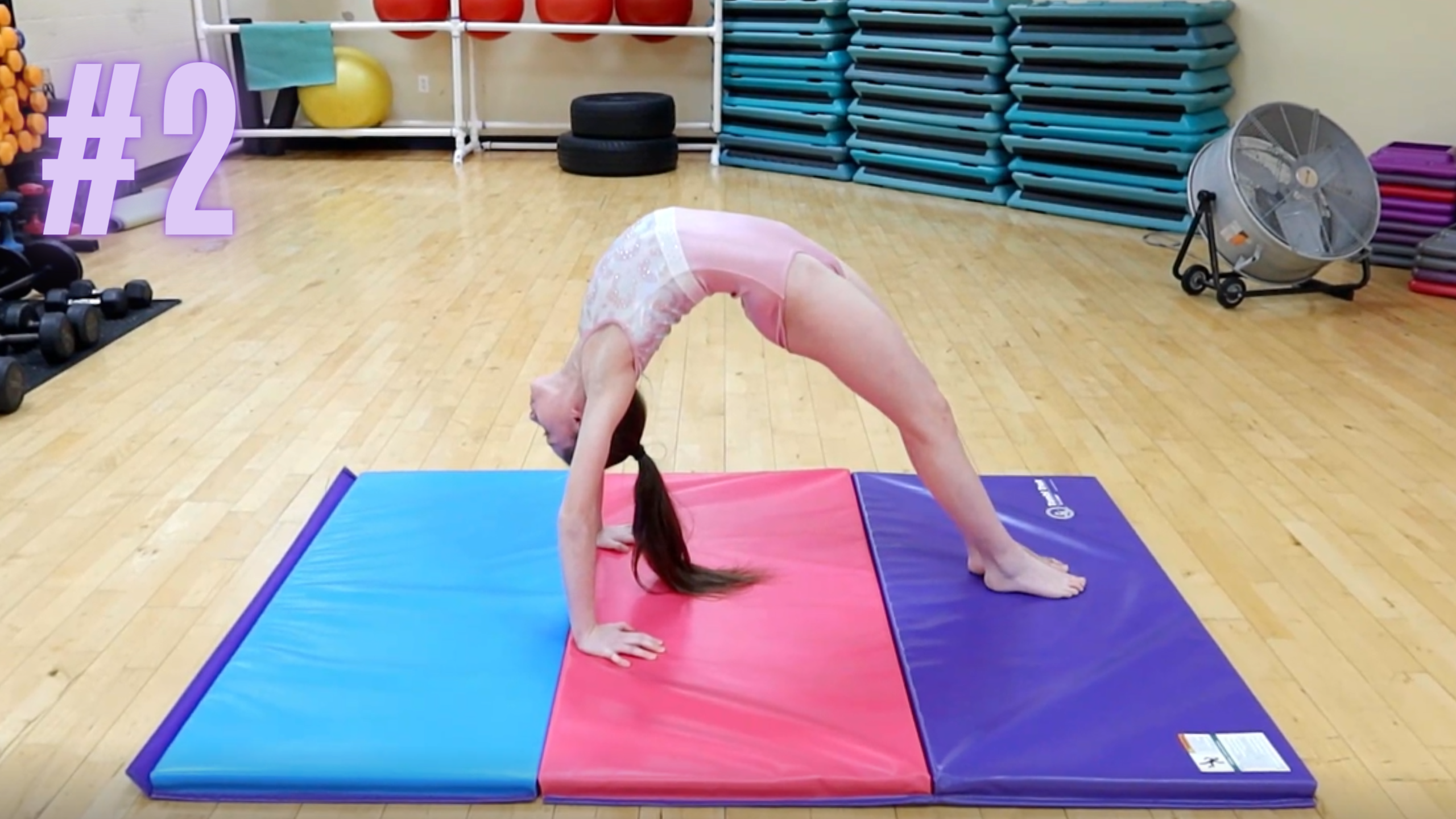
Bridge
Why it’s important: It’s the beginning of back tumbling. You need to be able to do a bridge before you can advance to a bridge-kickover, back walkover and back handspring!
How: You can practice on a panel mat or just on the floor. Lay on your back with your hands by your head and push up.
Common mistakes: Not enough strenght to get arms straight, or shoulder flexibility to get your shoulders over your hands
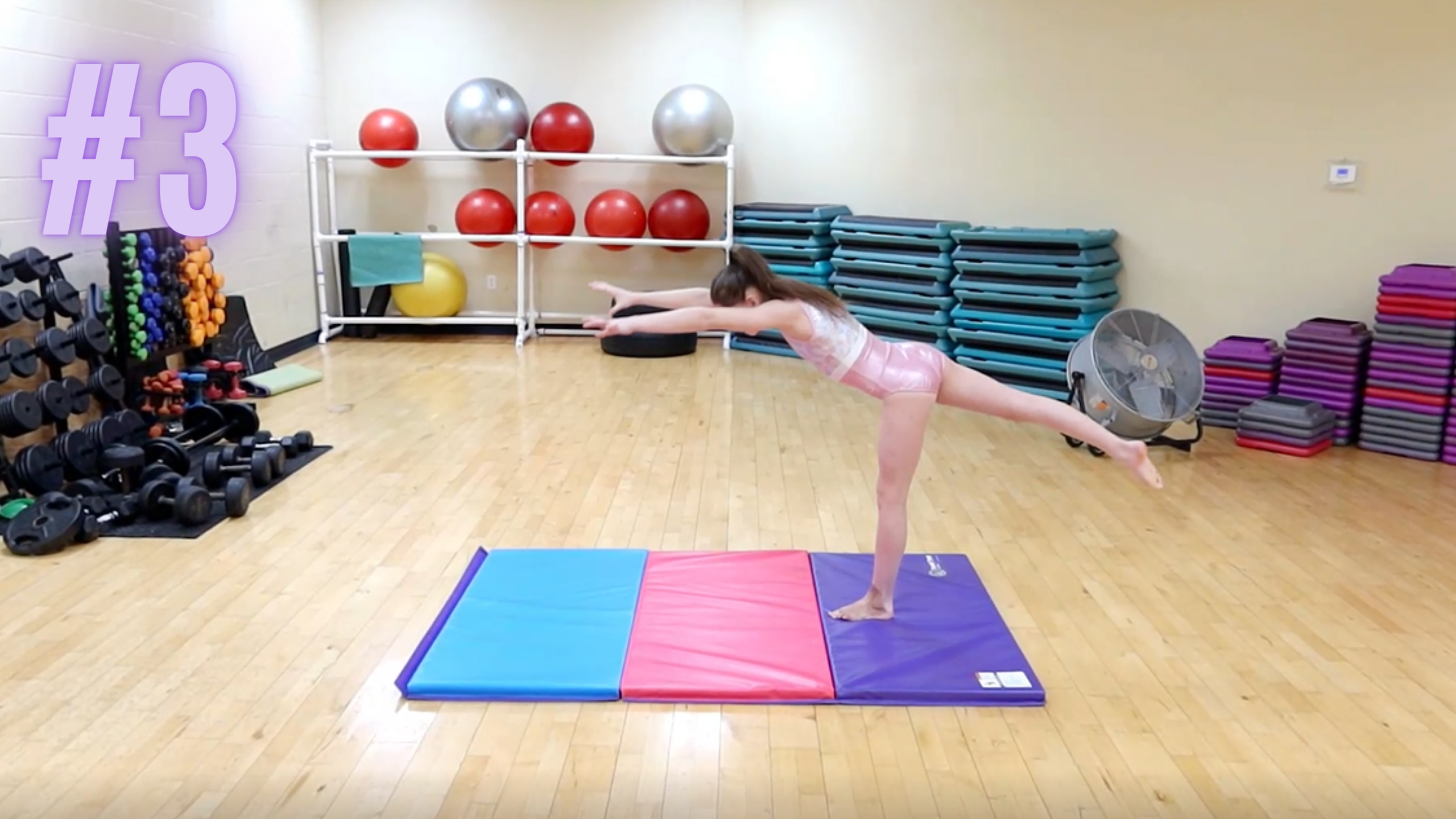
Cartwheel
Why it’s important: A clean cartwheel builds the shapes and timing for round-offs and back tumbling. It teaches lunge entry, straight arms, split shape in the air, and a controlled finish.
How: Start in a strong lunge (front knee bent, back leg straight, arms by ears). Reach forward and slightly to the side, placing hands on a straight line and rotate both hands 90° so fingers point in the travel direction. Kick the back leg first, pass through a wide split upside down (hips stacked), then land hand–hand–foot–foot into the opposite lunge with arms up. Practice on a taped line or panel mat.
Common mistakes: Skipping the lunge; bent arms; not kicking the back leg first; hands not on a line; head thrown to the side; knees bent in the split; finishing without turning to the opposite lunge.
Level up: Cartwheels on a line · Over a panel mat · One-hand cartwheel · Cartwheel step-in (round-off prep).
Coach cues: “Lunge—reach—hand, hand, foot, foot—finish” · “Kick back leg first” · “Push tall through shoulders.”
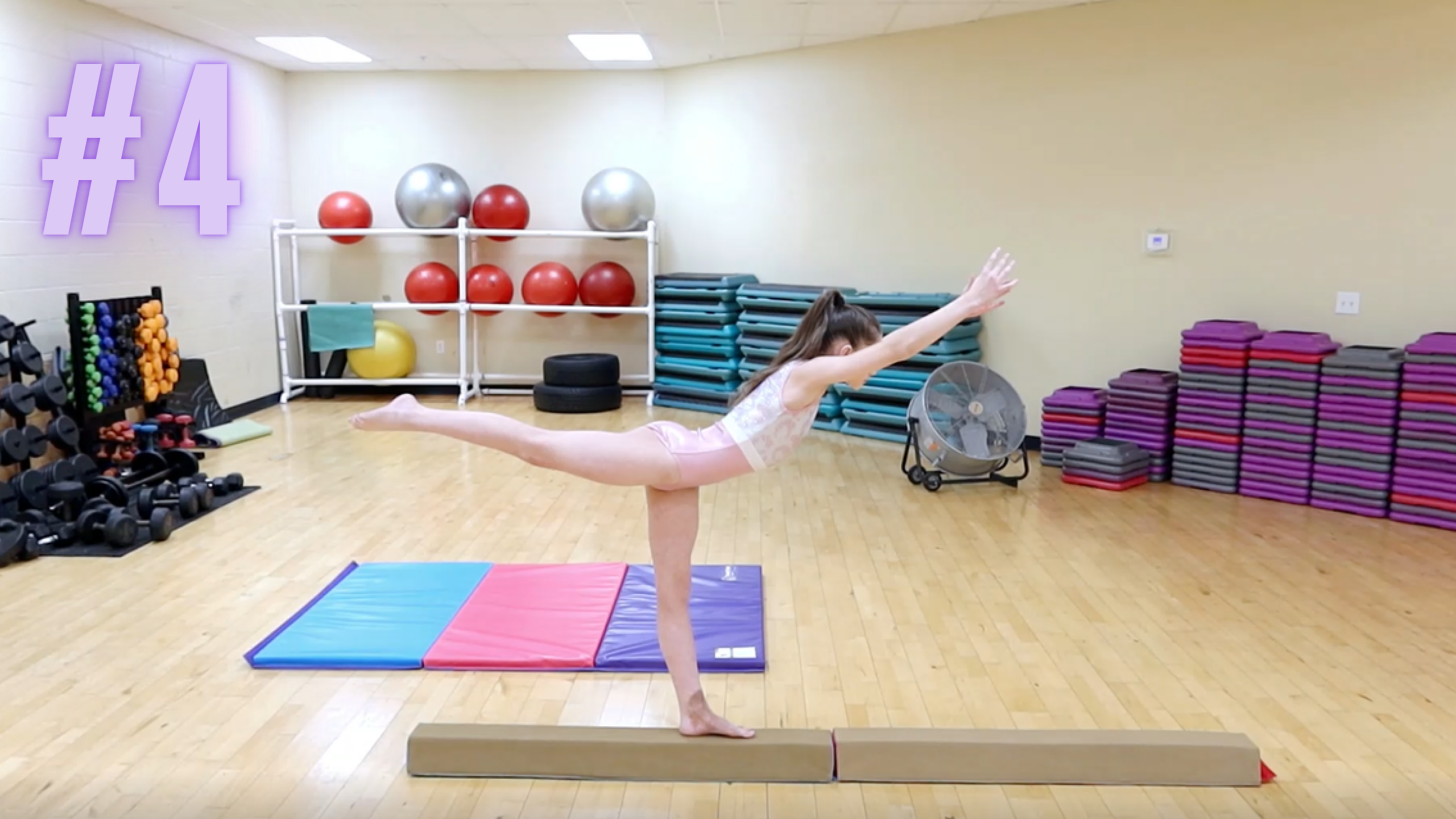
Scale
Why it’s important: Balance + active flexibility + core control for beam and floor.
How: Stand tall on one leg. Front scale: lift straight leg forward; Back scale: lift straight leg back. Hips square; chest lifted.
Common mistakes: Bent supporting knee, tilted hips, dropped chest.
Level up: 2×30s/leg holds and then add time
More help: 3 Types of Scales
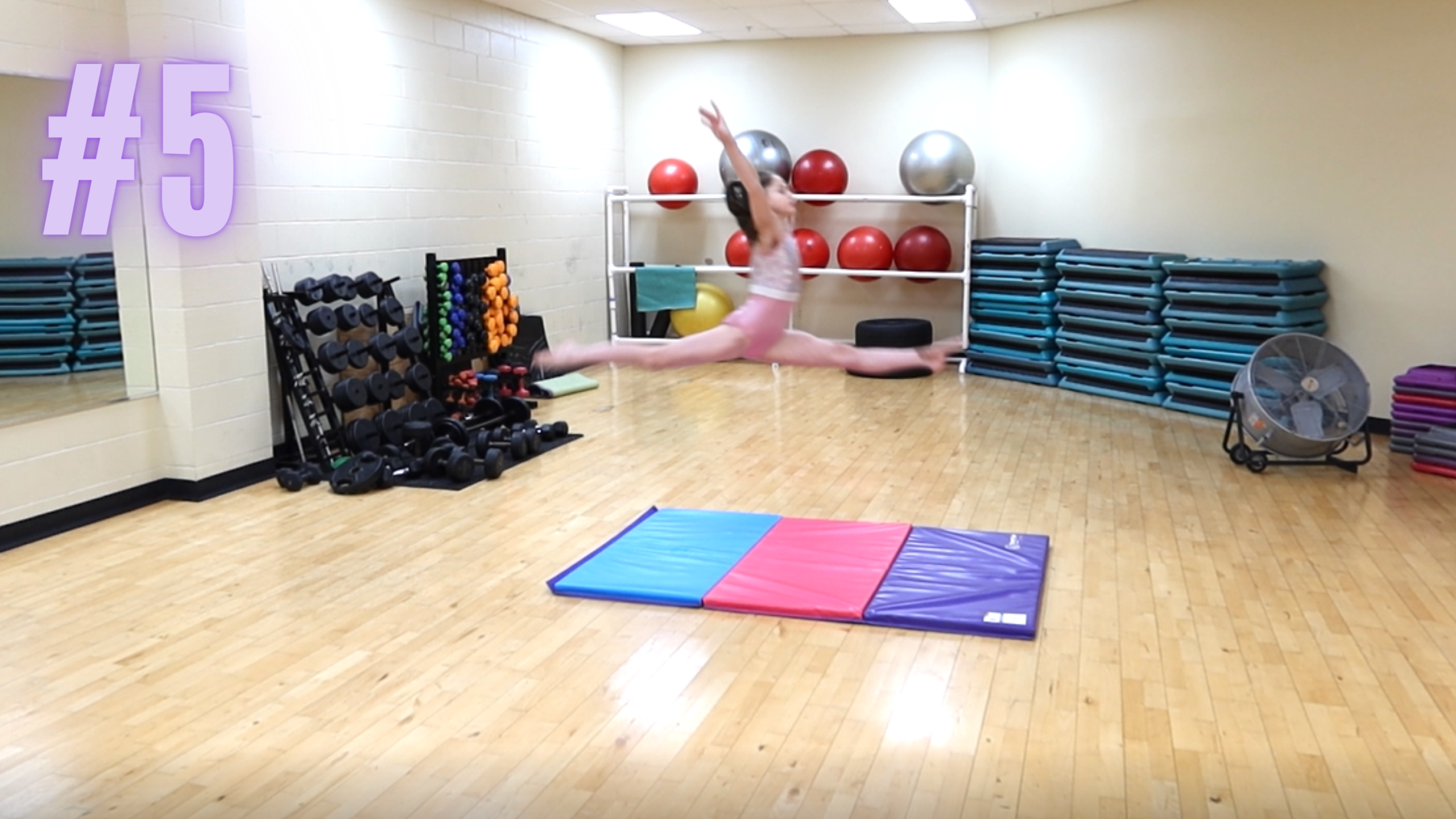
Leaps
Why it’s important: Leaps are required on beam and floor; clean shapes reduce deductions.
How: From a lunge, swing through to a split leap. Emphasize square hips, straight knees, pointed toes, even split.
Common mistakes: Bent front knee, uneven split, dropped chest.
Level up: 3×4 quality leaps; add run-up once shapes are clean; chase consistent height.
More help: Split Leap Guide · 5 Drills for Split Leaps · At-Home Split Leap Workout
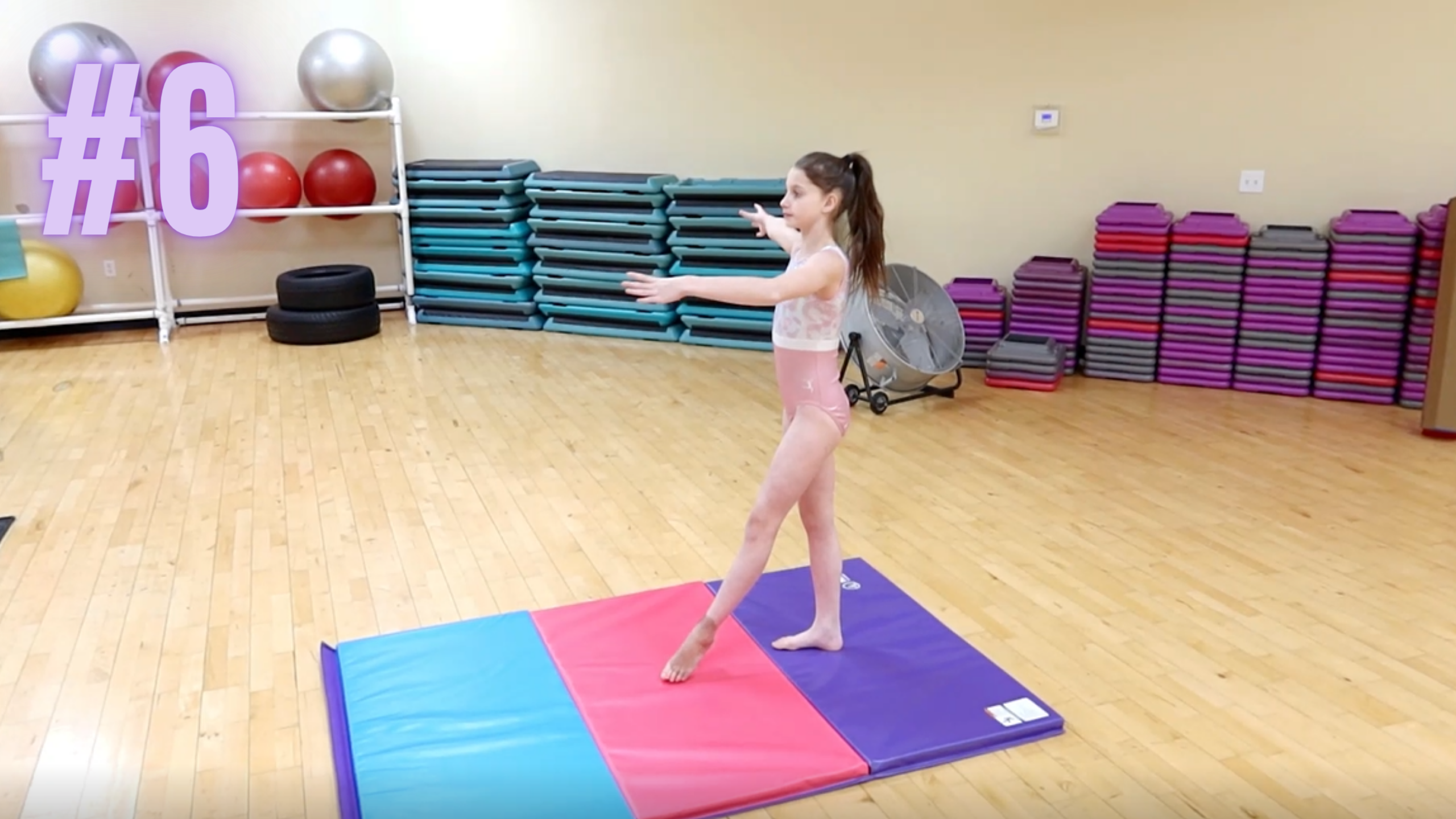
Turns
Why it’s imporant: Turns are required skills = fewer wobbles.
How: On carpet or socks on a hard floor, rise tall, passé, arms fixed. Spot a point. Practice quarter/half/full with control.
Common mistakes: Dropped heel, loose arms, no spot.
Level up: 2×4 clean full turns each side; add relevé holds pre-turn.
More help: 3 Drills to Improve Turns · Deductions in a Full Turn
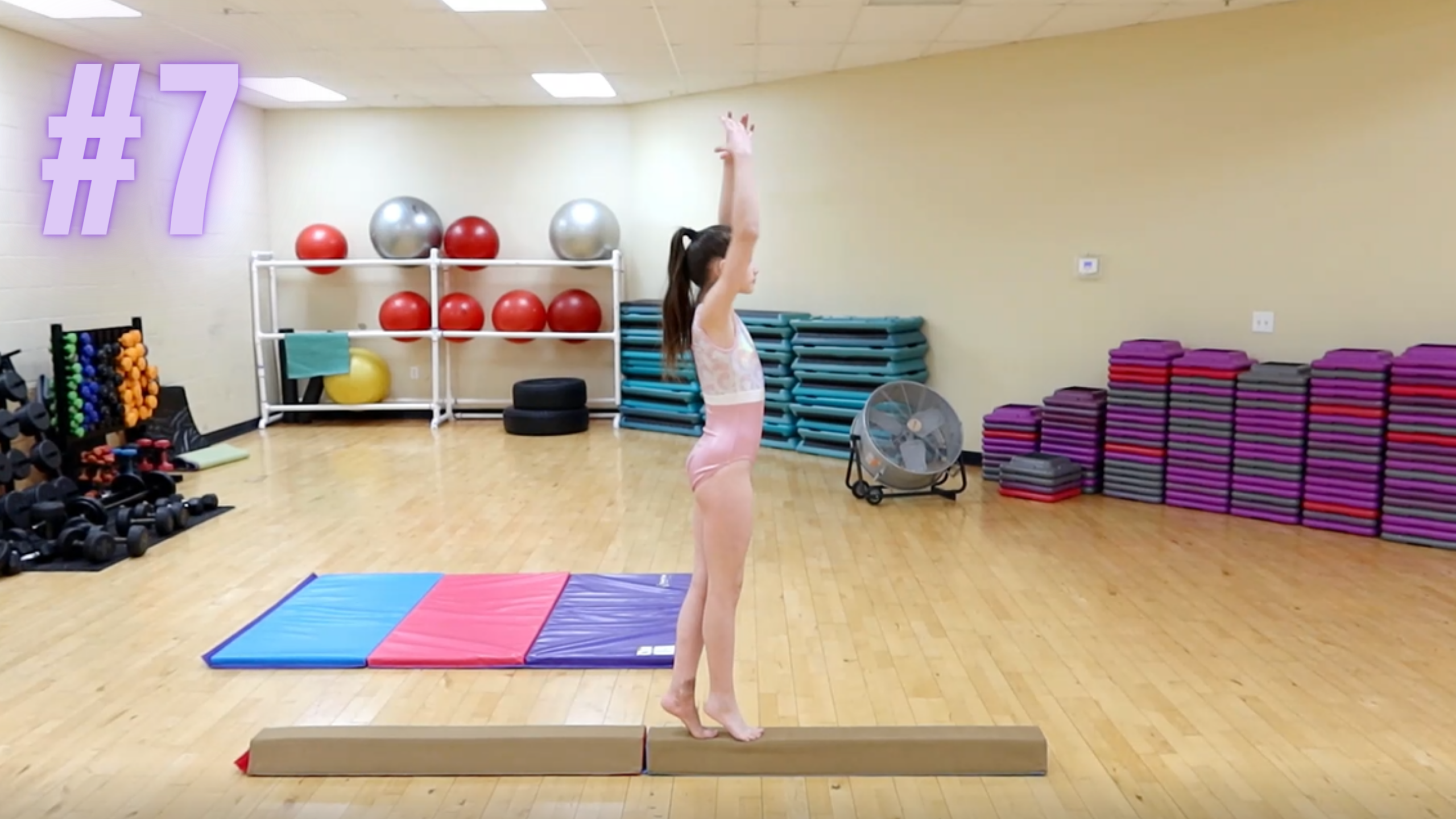
Pivot Turn
A pivot turn is used in most beam routines, and even some floor routines. This is another easy skill you can work on at home. You want to be completely tight, with no bobbles during your pivot turn. If you aren’t tight or bobble in your pivot turn while competing, you will get deductions. Practice squeezing tight and being in high relevé with your pivot turns. This is another great skill you can practice both on a mat or a low beam.
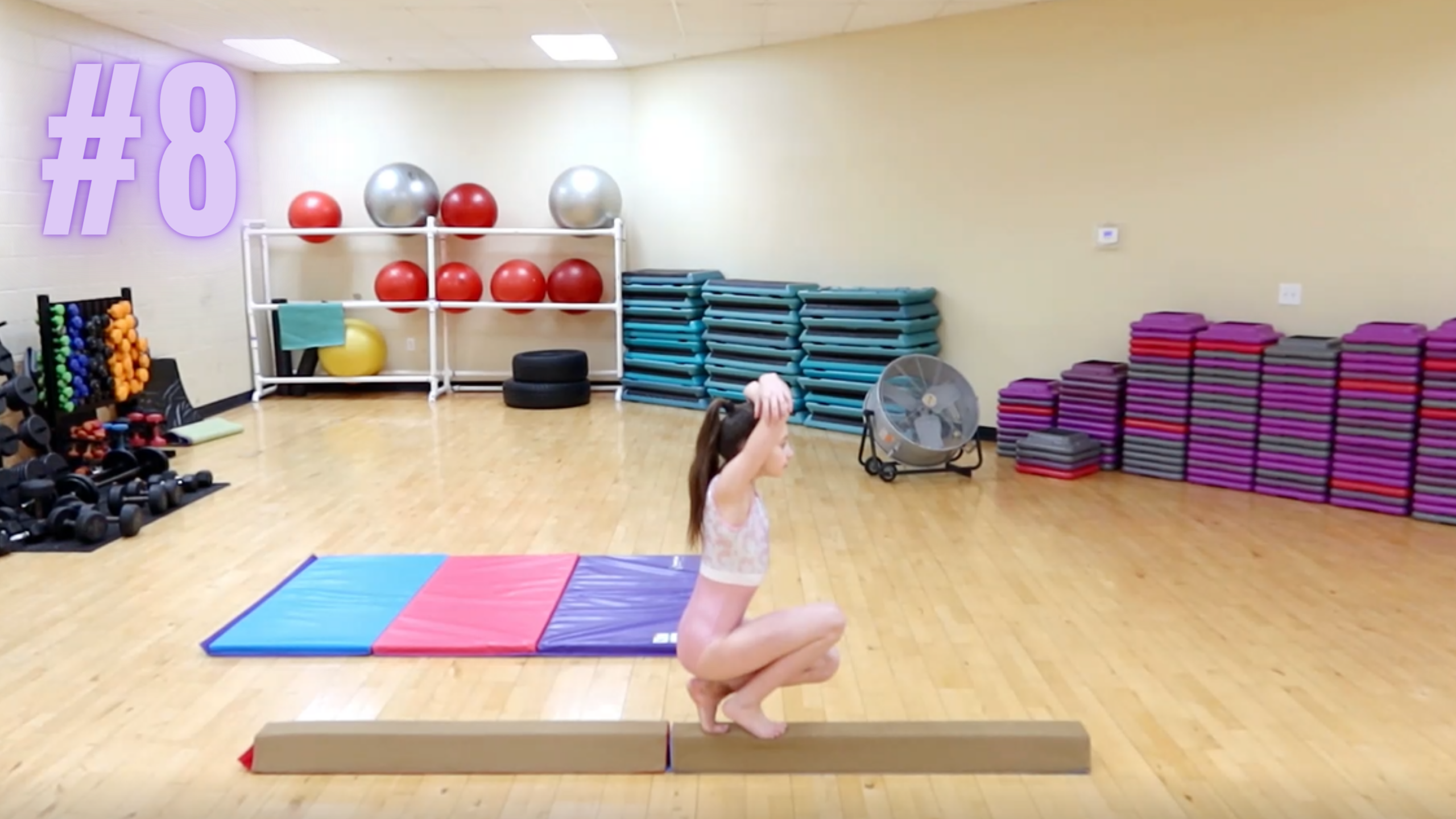
Squat Turn
The squat turn is a skill that is introduced in Level 4 and is also in Level 5 Compulsory Beam Routines. You want to practice doing this skill tight without any wobbles. To challenge yourself, see how many perfect squat turns you can do in a row without wobbling!
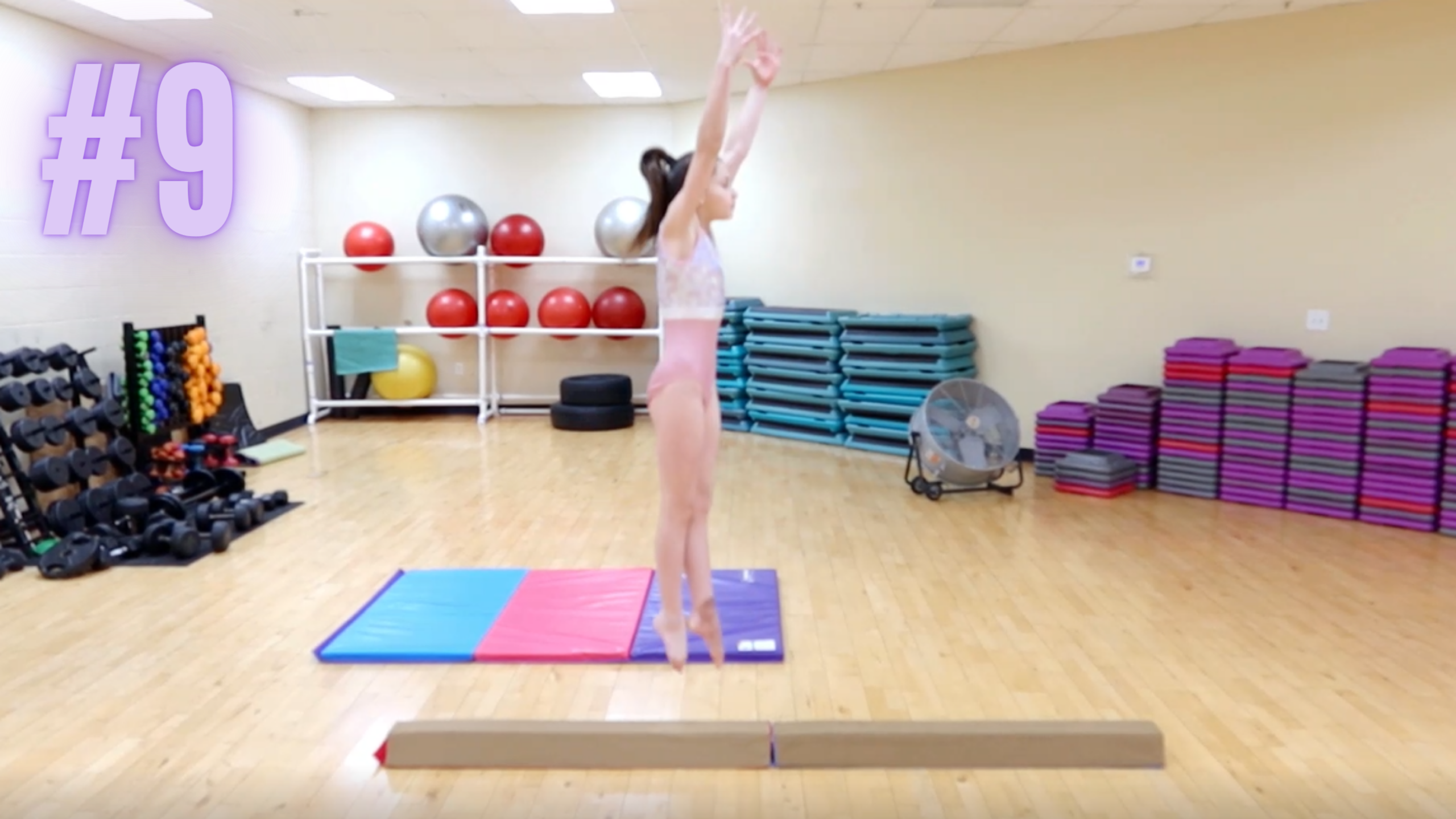
Straight Jump
Straight jumps are important skills in all events. You need good height and power in your jumps for tumbling skills on beam and floor, jumps on beam and floor, off of the springboard for vault, and on your bars entry. Make sure you are pushing off of the balls of your feet to get good height and have a tight body position. This is another great skill you can practice on either a mat or a low beam, or even a trampoline. You can also read how to improve your jumps.
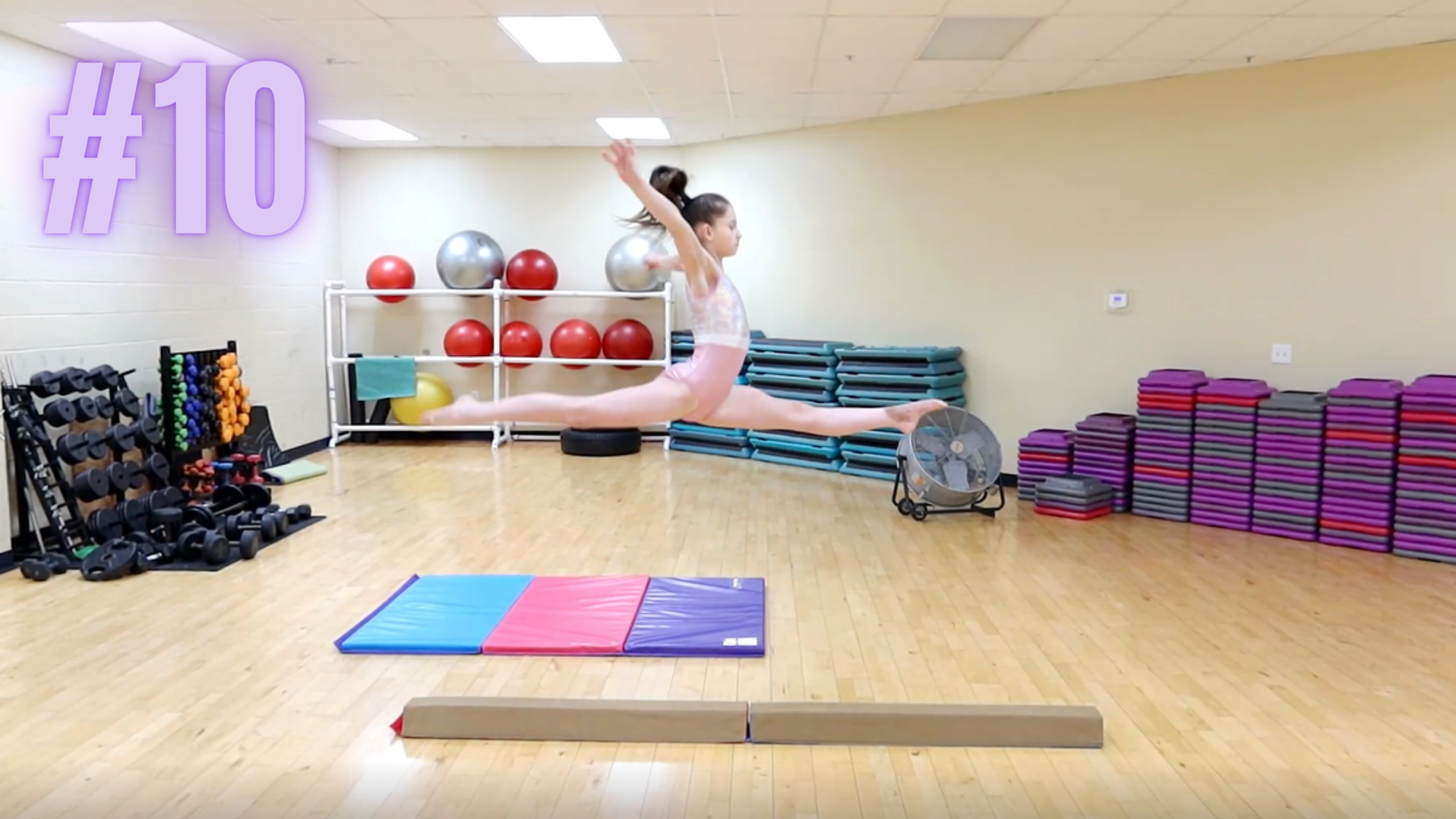
Split Jump
You want to practice your split jumps to improve on floor and beam. The same body position you use in a split jump is also the body position that will be utilized in your leaps. Just like in your leap, you want to evenly split your legs, while keeping your legs tight and feet pointed. Again, just like with your straight jumps, you can practice on either a mat or a low beam, or even a trampoline.
Practicing beginner gymnastics skills at home is a great way to build a strong foundation and improve your strength, flexibility, and coordination. By focusing on these 10 essential skills, you can develop the basics needed to advance your gymnastics abilities while having fun and staying active. Remember, consistency is key—keep practicing regularly, and you’ll see progress over time. Whether you’re working on handstands, rolls, or flexibility, these skills will help prepare you for more advanced movements when you’re ready to take your gymnastics training to the next level. So keep pushing yourself, stay safe, and enjoy the journey!
Our SkillTrakker program is a great way to add a little extra practicing at home each day – in less than 15 minutes a day, gymnasts all over the world are reporting improvements in their gymnastics skills! Consistency is key, as Level 9 gymnast Alyssa told us in her interview! @alyssa.jade_b


14 Comments
I feel like I have been at this level forever ♾!!! I can’t do my backhand spring or my front handspring but I just want to move on to five. What should I do to practice these if I’m not actually capable of it yet, and how can I practice at home if I don’t have someone to spot me???
Maybe talk to your coaches to see what they recommend – whether you have private lessons to work on these skills, practice at open gyms, etc. See what your coach’s feedback is!
Sorry! I forgot to add that I’m at level 4.
I forgot to add that I’m at level 4 right now in case anyone is confused.
I forgot to add that I’m at level 4
Good work, keep it up!
My girl wants to be a gymnascits
Cool
I can’t do a handstand. Heh heh… I am only level 1
can i come 1 day
I don’t now how to get flexible at all
For the girl who said they can’t do a back handspring, it helped me to practice and learn on a trampoline first.
This article brought back so many memories of practicing with my own daughter in our living room! We spent countless hours working on those exact beginner skills, and it truly built her confidence. I actually found our first practice mat on QVC after reading countless reviews to find the perfect one. For anyone else looking to buy equipment, I highly recommend checking out the QVC reviews on https://qvc.pissedconsumer.com/review.html to see what worked for other families. Those early days of practice were such a joyful time, and I’m so grateful for the foundation it gave her.