
Looking for the best home balance beam? This guide compares floor vs raised balance beams so you can pick the right height, beam length (8–9 ft is common at home, with sectionals reaching ~12 ft), and surface for your gymnast and space. We review a suede floor beam that feels like a competition beam, slightly raised practice beams for realistic feedback, inflatable air beams for confidence and easy beam storage, and modular sectional beams for budget-friendly length—plus quick tips on matting and safety.
Check out our full Home Gymnastics Equipment Guide for mats & bar picks.
How to Choose the Right Home Beam
1) Height: Floor vs. Slightly Raised
| Type | Height | Pros | Cons | Best for |
|---|---|---|---|---|
| Floor (flat or 1–2″ lift) | 0–2″ | Safest; low ankle risk; perfect for shapes & basics. | Less “real beam” feedback; advanced acro needs more mats. | Beginner–intermediate; tight spaces; apartments. |
| Slightly Raised | ~6″ | More beam-like; step-offs matter; confidence builder. | Needs side matting; heavier to move; still not full height. | Intermediates working cartwheels, BWO, leaps. |
| Inflatable (Air Beam) | Low, cushioned | Confidence-building; easy storage; fun for reps. | Bouncy feel; not suede; requires inflation. | Younger gymnasts; repetition; limited storage. |
| Sectional | Floor | Modular; portable; cheapest way to add length. | Less stable than one-piece; not for higher-level acro. | Budget setups; turns & lines; younger rec. |
2) Length
Competition beams are 16′, but at home 8′–9′3″ fits most rooms. Sectionals let you link 3×4′ = 12′ when needed, then disconnect to store.
3) Surface & Feel
- Suede/leather top = most “competition-like.”
- Foam floor beams = forgiving, safe for basics.
- Air beam = wider, cushioned, center line for alignment.
4) Storage & Footprint
- Folding beams slide under beds/into closets.
- Sectionals disconnect and stack.
- Air beams deflate and roll for easy storage.
5) Skill Level & Safety
Match the beam to the gymnast’s level and always add appropriate matting. For practice ideas, see our Beam Skills List.
Compare Picks
| Model | Type / Height | Best For | Length | Surface | Storage & Notes |
|---|---|---|---|---|---|
| Addie Beam (Suede Floor) | Floor / ~0–2″ | Overall home use; safest basics & shaping | ~93″ | Suede, comp-like feel | Lightweight; easy to move; pair with panel/practice mats |
| Folding Practice Beam | Floor / ~2″ | Small spaces; quick set-up | 8′ | 4″ top; foam core | Folds in half; store under bed/closet |
| AAI Air Beam | Inflatable / low | Confidence; fun reps; alignment | 9′ (with raised center line) | Inflatable with center line | Deflates and rolls; needs inflation for use |
| Tumbl Trak Sectional Beam | Floor / modular | Budget; add length as needed | 4′ sections (link 3 = 12′) | Suede-like | Connect/stack sections; less stable than one-piece |
Best Home Balance Beams (Reviews)
1) Suede Floor Beam — Best Overall

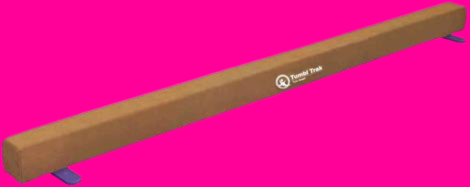
This suede floor beam gives a similar feel to a competition beam at home. The base is coated in rubber for safety, it’s easy to assemble, and the slight lift helps gymnasts feel step-offs without adding height risk.
- Pros: Low and safe; comp-like surface; easy to move.
- Cons: Shorter than regulation; not full height training.
2) Folding Practice Beam — Best for Small Spaces
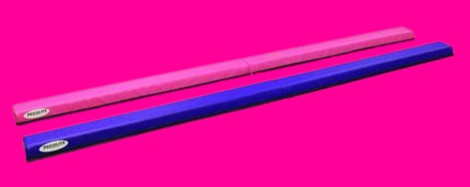
The folding beam is 2″ high and 8′ long, with a 4″ top (same width as competition). It folds in half for easy storage—perfect for tight rooms.
- Pros: Compact; stores easily; regulation-width top.
- Cons: Only ~2″ high; shorter length; less “solid” feel than one-piece beams.
3) Air Beam — Best to Make Practicing Fun

This Air Beam is 16″ wide by 9′ long with a raised center line for alignment. It inflates/deflates quickly and stores small—great for confidence-building reps.
- Pros: Cushioned; alignment line; easy storage.
- Cons: Bouncy; not suede; needs inflation.
4) Tumbl Trak Sectional Beam — Best Budget/Modular

Each sectional beam is 4′ and connects via hook-and-loop. Link three for ~12′, then disconnect to store. Same 4″ top width; suede-like feel.
- Pros: Inexpensive; add length as needed; easy to store.
- Cons: Less stable than one-piece; not ideal for advanced acro.
Required Matting (Don’t Skip This!)
- Even for floor beams: Use a panel or practice mat to soften step-offs and reduce impact.
- Slightly raised (~6″): Add matting on both sides—aim to cover likely landing zones for cartwheels, backwalkovers, and leaps.
- Air beams: Place on a clean, open area; add side mats for dismount practice.
- Storage: Measure closets/under-bed height if you plan on folding or stowing your mat/beam.

Recommended mats: 4′×8′ Panel Mat for general practice.

Cartwheel Beam Mat with hand/foot guides for beginners.
Home Beam Skills (Video)
- Jumps
- Split Leaps
- Pivot Turns
- Relevé Beam Walks
- Beam Scales
- Backward Shoulder Roll
- Handstand
- Cartwheels
More ideas in our Beam Skills List.
Frequently Asked Questions
What length beam should I buy for home?
8′–9′3″ fits most rooms and allows turns, handstands, cartwheels, and BWO progressions. If you need more length for routines, connect three 4′ sectional pieces to reach ~12′, then disconnect to store.
Do I need a mat around a home beam?
Yes. Even floor beams benefit from a panel or practice mat to reduce fall impact. Slightly raised beams (≈6″) should have matting on both sides.
Is a floor beam or raised beam better for beginners?
Start flat or low. A floor beam is safest for learning body positions and confidence. Move to a slightly raised beam once shapes and accuracy are consistent.
What’s the standard width of a beam?
4 inches (10 cm). Choose a home beam with a true 4″ top so practice translates to the gym.
How do I store a beam in a small space?
Pick a folding beam (under-bed/closet), a sectional (disconnect and stack), or an air beam (deflate and roll). Measure doorways and storage depth before you buy.
