
The Floor Exercise, or “Floor”, is one of the 4 Olympic gymnastics events–along with Vault, Bars and Beam. The floor event is one of the most captivating and dynamic aspects of artistic gymnastics. This event combines athleticism, artistry, and musicality, offering gymnasts a stage to showcase their strength, flexibility, and creativity. Floor 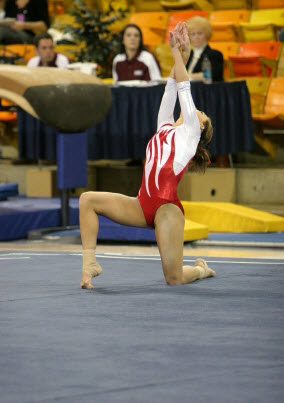 routines are a mix of tumbling passes and dance elements. Floor requires both strength and power to perform great tumbling skills, but also grace and flexibility to perform beautiful dance moves.
History of the Gymnastics Floor Event
The gymnastics floor event has a rich history, evolving significantly since its inclusion in the modern Olympic Games in 1936 for men and 1952 for women. Originally, routines were performed on wooden floors without any music for men and with live piano accompaniment for women. Today, gymnasts perform on a spring floor with recorded music, enhancing their ability to execute powerful tumbling passes and expressive dance elements.
The Apparatus
The floor area is a square measuring 39 feet by 39 feet. The diagonals are about 55 feet long. The competition area for the gymnastics floor event is a square measuring 12 meters by 12 meters. The floor is a specially designed surface with springs or foam blocks beneath it, providing the necessary rebound to support high-flying tumbling skills and to help reduce the impact on the gymnast’s body in landings, so it’s better for gymnasts’ joints, and helps gymnasts gain height while tumbling. In other words, this surface allows gymnasts to perform their routines with both safety and dynamic flair.
Routine Composition
Gymnastics floor routines are composed of acro and dance elements. Depending on the gymnastics level, depends on the specific requirements but most gymnastics floor routines are composed of the following:
Tumbling Passes– Tumbling is the heart of the gymnastics floor event. Gymnasts perform a series of acrobatic skills in succession, combining flips, twists, and somersaults. These passes demonstrate the gymnast’s power, control, and technical skill. A tumbling pass is the connection of 2 or more acro elements. Most of the time tumbling passes are done along the floor diagonals. An example of a tumbling pass would be a round-off–back handspring-back tuck. Some levels require both forward and backward tumbling skills.

Jump or Leap Series– Dance elements include leaps, jumps, and turns, adding an artistic dimension to the routine. These elements are performed to music, requiring gymnasts to exhibit grace and rhythm. A jump or leap series is the connection of multiple jumps or leaps. An example of a jump series would be straight jump-tuck jump. An example of a leap series would be split leap-switch leap. Gymnasts also can combine leaps and jumps. An example of a series with both a leap and a jump would be a switch leap-straddle jump.
Combining dance and tumbling skills in a seamless flow is crucial. Gymnasts transition smoothly between elements, showcasing their versatility and the fluidity of their movements.
Turn– Most floor routines require a turn on one foot.
You can check out a floor skills list here.
What Makes a Good Floor Routine?
The choreography and expression are essential components. Gymnasts select music that complements their style and routine, and they must convey emotion and storytelling through their performance. A good floor routine should have a balance between strong tumbling passes and dance elements. The tumbling passes should be done with good form and the saltos should have height. The dance elements should be dynamic and the jumps should have height. The routine should be artistic and enjoyable to watch. Gymnasts should take advantage of the entire floor space. Balance skills, such as handstands and various poses, should be integrated to demonstrate the gymnast’s control and flexibility.
Training for the Gymnastics Floor Event
Training for the gymnastics floor event requires a blend of strength, flexibility, and endurance. Gymnasts spend hours perfecting their tumbling skills, honing their dance elements, and building the stamina needed to perform a full routine without fatigue. Conditioning exercises, flexibility training, and repetitive practice of individual skills and full routines are all integral parts of a gymnast’s preparation.

9 Comments
Great post! I agree 100% that the proper flooring should be in place to provide you with safety and comfort. Also, they can help lower your risk to injury, protect the foundation of your business, and ensure oneself that you are getting the most out of your workout. Thanks for sharing!
It’s a shame you don’t have a donate button! I’d certainly donate to this superb blog!
I suppose for now i’ll settle for bookmarking and adding your RSS feed to my Google account.
I look forward to fresh updates and will share this website with my Facebook group.
Chat soon!
I’ve always enjoyed watching gymnastics and wanted to learn more about the sport. You wrote that floor routines almost always include leaps, jumps and handsprings. With how much force this could put on your joints, you would want to have good flooring to help protect the gymnasts. Thanks for the informative read.
thank you
Speaking of finding your rhythm and connecting with confidence… if you ever want to practice performing under pressure, check out https://mirami.video live video chat – kind of like improv for social skills.